|
|
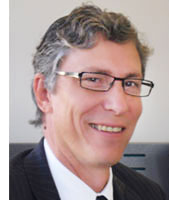 Welcome back and welcome to 2012! Welcome back and welcome to 2012!
We had a busy and productive 2011, capped off by the energy and commitment demonstrated by those at the HINZ conference. This year, the pressure remains on - our progress is critically important to achieving the eHealth Vision in 2014.
I've been very impressed by the progress being made in the northern region. Health Alliance is showing great professionalism in the way they are leading and delivering on health IT. Their governance and leadership models are coming together, with their IT director in place and funding arranged for a four-year implementation plan. Now there's a challenge to the rest of the country!
This regional approach is bringing huge, tangible benefits for the people of Northland and the clinicians who care for them. In the last quarter of 2011 they went live with access to the new clinical workstations, financial systems and test result systems and will get access to the Regional Clinical Data Repository (TestSafe) this year. Even with a massive effort, there's no way a smaller DHB working independently could get this far this fast on their own – putting all these new systems in place would have taken years.
In the next 12 months the Ministry of Health will deliver the new National Health Index (NHI) and Health Practitioner Index (HPI) platform to further support the safe sharing of information across the sector. Almost all New Zealanders have an NHI number, a unique patient identifier. It ensures health professionals know who they are treating and should mean patients don’t have to keep repeating information every time they present for care. However the system dates back 20 years, and the new platform will address issues with accuracy and accessibility.
This year will also see us continue working with the Health Quality & Safety Commission and clinicians to change the way New Zealanders’ medicines and drug information is collected and used. The focus is on quality, to ensure the right information is at hand so patients and clinicians can access the same information, including the risk of adverse drug interactions.
Health organisations, institutes and entities must have the confidence to invest in the IT systems needed to run their business. We must create patient-centred information that reflects a comprehensive health journey which requires information to be shared across organisations in a trusted way.
I’ll also continue thinking about how national solutions and health IT innovations are funded and delivered. We need a mechanism to support smart investments in innovation, encouraging software vendors to co-invest and innovate in New Zealand. Boosting the capacity and capability of IT teams is also paramount to achieving the eHealth vision.
We're off to a great start already – read on for more updates, including the Southern region's plans and progress.
Graeme
Director
National Health IT Board
Back to top.
|
|
| |
|
|
|
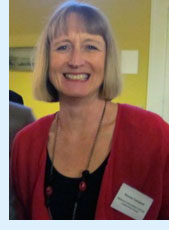
Norma Campbell is a leading voice for women and midwives.
She's one of the New Zealand College of Midwives' National Midwifery Advisors and sits on many committees and advisory groups nationally, including our own National Information Clinical Leadership Group (NICLG).
"I've learned a lot by being on NICLG because it is multi-disciplinary. I can then bring these different perspectives back to midwifery and maternity. I hope the value I add is that I can help join the dots because I sit on so many different national groups."
Norma was getting ready for a night-shift at Lincoln Maternity Hospital when we spoke with her, and remains passionate about practising her profession.
"That's what keeps me going, what keeps me grounded. I love working with young women and seeing women become mothers. I also enjoy working with colleagues, being part of a team."
Norma is on the advisory group of the NHITB's Shared Care Maternity Project to establish electronic shared care records for New Zealand women requiring maternity services.
"It's a privilege to represent midwives and work to ensure women get quality maternity services."
A Shared Maternity Record of Care will be made available to clinicians through a clinical portal, and to women through a personal health portal. A trial will take place in two sites – Auckland District Health Board (DHB) and Canterbury DHB – and the first site is expected to go live in April 2012. (See our November newsletter for more information.)
"It's going to be great for communication between health professionals, and the consumer portal will be really helpful for women too. The advisory group is working hard and is a great group to be a part of as we all have the same vision. We're currently working with Orion and wading through all the requirements. Having all the participants from across the sector working together, including consumers, is such an enabler to other things as well.”
The IT experience for midwives varies markedly, depending on where they work. Norma says self-employed midwives have access to a great patient management system established by the College called the Maternity and Midwifery Provider Organisation (MMPO), where women carry their own notes. "It's taken 15 years of development. Midwives have funded it themselves and we are really cautious that all the maternity IT projects add value and do not damage what has been achieved."
This contrasts with the legacy systems District Health Boards currently use that can mean health professionals working in maternity have to work very hard to "tie up loose ends to make sure women don't fall through the cracks". The new DHB Maternity Clinical Information System IT Project should address these issues as it is developed and starts to roll out nationally.
Living in Canterbury, Norma has also faced the challenge of the recent earthquakes. "We really want to move forward and while we know we can't wallow in it, for many people the sleep deprivation and mental health issues have been pretty harrowing. It would be nice to have stability again but I suspect we won't have this luxury again in my lifetime."
Norma currently works from temporary offices on industrial premises. "The quakes taught us about the importance of IT and data repositories as, while we were fine, we watched many paper systems destroyed in damaged buildings.
Back to top.
|
|
| |
|
|
|
 Project gets its teeth into dental systems
Setting up one oral health system for all DHBs will bring "huge benefits," says National Programme Manager Paul Badco.
Most DHBs use a variety of versions of an oral health system called Titanium and it can be quite expensive for smaller DHBs and NGO providers to start up.
"Some DHBs are still paper-based and have no system so this will be a huge leap forward."
Paul Badco says the project aims to get all DHBs and the New Zealand Defence Force on one common version of Titanium, with one data set and standard. The project includes hospitals and community oral health services for children and adolescents, including Maori providers who may wish to join up.
"Defence have been tremendous in this process, providing both leadership and support."
The project may also partner with the Department of Corrections in future.
"This project is leading the way for IT procurement in the health sector. A lot of other projects have been following us closely."
He says the project will improve efficiency, as DHBs and the vendor will not be replicating the same thing 20 or more times. It will also save the taxpayer money and provide support for DHBs to get the most from the information they collect.
"Reducing national reporting requirements, while increasing the amount of information available to support improved services and clinical outcomes, are key deliverables for this project.
"We'll actually be able to get more accurate information without anyone having to do anything except push a button."
The National Dental System is a five-year project. The national contract and dataset will be ready in the next few months and it will be in all DHBs within the next two to three years.
Back to top.
|
|
| |
|
|
|
A video showing how smart IT solutions are working at the frontline of health care in New Zealand is well worth a look.
You will meet Tupotahi Maniapoto, a patient with gout, and follow his journey through the health system as the latest health IT support his care. Along the way he meets Dr Peter Gow and Dr Janine Bycroft and finds out about electronic prescribing and shared care.
The five-minute video was made by the New Zealand Health IT Cluster, with support from New Zealand Trade and Enterprise.
Some interesting statistics from the video include:
- More than 50 million messages are sent via secure health data networks yearly
- Thirty health systems around the world use New Zealand IT solutions and systems
- Over 95 percent of New Zealand GPs use practice management software
To view the video click here.
Back to top.
|
|
| |
|
|
|
New look for Ministry
The Ministry of Health is revising its look and feel for the first time in eight years to reflect a fresh, professional and more co-ordinated image.
National Health IT Board (NHITB), The National Health Board, and Health Workforce New Zealand's logos have been standardised. To ensure cost-effectiveness, the design changes are being phased in from late January.
The NHITB's position as a sub-committee of the National Health Board, our work programme and the way we work with the sector remain unchanged.
Please use the new NHITB logo in any power point presentations or publications and websites that mention the NHITB or the National Health IT Plan. Please contact robyn_nicholl@moh.govt.nz
Back to top.
|
|
| |
|
|
|
|
|
|
|
|
|
|
|
 Dr Andrew Bowers
Clinicians will soon move more smoothly between hospitals in the South Island as the benefits of taking a regional approach to health IT investments begins to pay-off.
Lining up all the IT systems across a region has "huge practical benefits" for clinicians, says Dr Andrew Bowers, who is Medical Director of IT for the Southern DHB.
Patients also benefit, with clinicians able to access the same set of results anywhere in the South Island.
"If you're from Christchurch but away on holiday and end up visiting a GP in Timaru, then the hospital in Dunedin, everyone sees the same information and that's a big deal."
He says the top priority for the South Island this year is assessing a suitable patient administration system, with South Canterbury and Nelson-Marlborough’s need most urgent, and aligning clinical desktops using Concerto at more DHBs.
"It's a big job, but we’ll use the knowledge we’ve gained already to adapt how we do it."
The next priority is taking a coordinated approach to medication prescribing, coordination and management. The successful electronic prescribing programme at Dunedin Hospital may be extended to other hospitals in Otago, Southland and Canterbury over the coming year.
"It has gone very well in Dunedin and demonstrated a dramatic reduction in errors."
The Canterbury approach to e-referrals is being evaluated, with a view to rolling out its system over the whole South Island over the next 12 months.
Dr Bowers is clear about the key challenges the region faces – geography and funding.
"The tyranny of distance – we physically cover the largest area of any DHBs by a long way, it can be two days drive between hospitals."
Overcoming funding constraints, especially when you have to get five DHBs lined up to contribute, is another challenge. In an 'innovative' solution, all southern region DHBs will contribute to the salary of the soon-to-be-appointed Southern District Programme Director. "This is formally showing that the southern region DHBs are keen to cooperate."
The main benefit he sees from taking a regional approach is greater understanding and cooperation between District Health Boards – "actually a level of cooperation we've never seen before" – and co-ordinated planning of patient-related systems.
Dr Bowers continues to work part-time as a specialist physician in acute internal medicine. He commits 50 percent of his time to local and regional IT. This is potentially increasing to support national initiatives. Dr Bowers chairs the South Island Information Systems Alliance and is a member of the IT Health Board's National Information Clinical Leadership Group (NICLG).
He sees real benefits in clinicians taking a leading role in IT projects. "It's a very important perspective as we can see where the clinical need is greatest and where patient safety can really benefit."
Back to top.
|
|
|
|
|
|
|
|
|
|
|
|
|
|
|
|
|
|
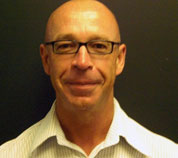
The palliative sector is warmly welcoming new standards for information about palliative care.
A "very clear call" from the sector for standards around what data to collect and how to collect it sparked the development of specialist palliative care data definitions, says Ministry of Health Principal Technical Specialist (Cancer) Steve Creed.
"We've had a lot of positive feedback on the new standards."
Palliative care patients receive treatment in a variety of settings from a range of people so there is a real need for standard ways of gathering information.
The standards will help palliative care providers to benchmark against other organisations and potentially against national standards. This will lead to better services and improve patient care.
The standards are also part of the wider health sector's work towards shared cared records as part of the National Health IT Plan. "The plan has been a very useful instrument for us," says Steve Creed.
A data work group developed the standards, facilitated by Steve Creed as the sole technical resource on the project. Other group representatives included a GP, palliative care specialists, community nurses and hospital-based palliative care staff.
Developing the standards took three work group meetings over 18 months and then the HISO process.
The standards were published in December 2011 and will become endorsed standards after a successful pilot. "We are still looking for a pilot opportunity but people can use the interim standards in the meantime."
The next step for information management in palliative care is some kind of national view, Steve Creed says. "There's no lack of information, but there is a lack of integration of information."
Back to top.
|
|
|
|
|
|
|
|
|
|
|
|
|
|
|
A National Change Programme is being developed to improve how ICT changes are planned and coordinated across the sector - starting with primary care.
It is based on the success of the secondary National Change and Maintenance Programme ( NCAMP). The process will be further developed for secondary and national systems over the next 12- 18 months.
Agencies signing up for the programme include the Ministry of Health, ACC, Pharmac, General Practice New Zealand, the New Zealand Health IT Cluster and all DHB's. Planned changes will be run past a representative governance body, a clinical body and then vendors to ensure proper resourcing and understanding.
Back to top.
|
|
|
|
|
|
|
|
|
|
|
|
|
|
|
|