 |
| |
| |
 Our eHealth vision is to achieve high-quality health care and improve patient safety. By 2014, New Zealanders will have a core set of personal health information available electronically to them and their treatment providers, as they access health services. Our eHealth vision is to achieve high-quality health care and improve patient safety. By 2014, New Zealanders will have a core set of personal health information available electronically to them and their treatment providers, as they access health services.
I was privileged recently to present New Zealand’s eHealth vision and programme to eHealth leaders in Canada, and to learn about the Canadian eHealth programme. The presentation took place at a function hosted by New Zealand Trade and Enterprise, at which six New Zealand IT vendors were present.
Canada has been working on an eHealth programme for seven years, led by the not-for-profit, Government-funded Canada Health Infoway. Their eHealth programme has a focus on the development and adoption of electronic health record systems with compatible standards and communications technologies. Their biggest challenge is to improve primary healthcare uptake of clinical systems (currently 40 percent) and to gain benefits from their investment in electronic health records.
Those present were very positive about the way the IT Health Board has engaged clinicians in our eHealth vision, through the National Information Clinical Leadership Group. This group, made up of representatives of the professional colleges, ensures there is national agreement on clinical processes before health IT solutions are designed and implemented.
The audience was also supportive of the IT Health Board’s emphasis on including clinicians who will benefit from new IT solutions, in governance teams charged with the implementation of these technologies.
Shared care was another area of interest, and in particular the interface between primary health care and specialist/hospital-based care. In fact, a key difference between the respective eHealth programmes is how the New Zealand programme focuses on the continuum of care, supported by shared care plans that enable multi-disciplinary team care delivery, rather than a focus on implementing an electronic health record system in its own right.
The general feedback from those present was that New Zealand has a pragmatic and engaging approach to the delivery of our eHealth vision, and that our progress will be followed with interest.
On another matter, the IT Health Board is aware that consolidation of primary health organisations and the introduction of new Better, Sooner, More Convenient operating models are driving GP practices to standardise on common practice management systems. There are impacts to software vendors, as GP practices – which made individual choices a number of years ago – are now moving to common platforms to meet the needs of the new models of care.
Software vendors will need to review what is being asked of them in the new environment, (examples could include a patient portal and support for after-hours access), in order to be successful going forward.
The IT Health Board remains committed to a market place with three to five active and competitive products in the primary care/community space. We have a continued focus on interoperability standards to support this approach, as well as a commitment to reducing barriers to entry.
This newsletter marks the end of the 2010/11 year, an important establishment period for the IT Health Board. The IT Health Board has a challenging programme set out for the next 12 months with a strong focus on eMedicines and integrated care initiatives. We look forward to continuing to provide leadership in health IT investments based on an open and engaging style.
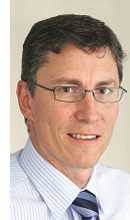
Graeme Osborne
Director
National IT Health Board
|
|
| |
|
|
| |
|
|
| |

It’s that time again, when we call for clinicians to present us with a challenging problem, and then ask IT vendors to come up with a solution. Last year we had about 20 entries and are hoping to double that this year.
The Clinicians’ Challenge 2011 is run by Health Informatics New Zealand (HINZ), the New Zealand Health IT Cluster (NZHITC) and the IT Health Board. It is an opportunity for clinicians and vendors to work together to use information technology to solve problems that health professionals face in their day-to-day practice. The aim is to promote the use of information technology in health.
To enter the Clinicians’ Challenge outline your problem briefly (500 words or less) and send it to admin@hinz.org.nz by 9 September 2011. Individuals or groups of clinicians can enter.
The winning case will lead to a solution that promotes better integrated care across the primary and secondary care sector. The problem should be important and recurring. It may be a process that needs improving or an enhanced or new way to find, store or share health information.
Three shortlisted cases will be selected and then the ultimate winner chosen for the Clinicians’ Challenge 2011. The winning problem will be set as a challenge to health IT vendors, who will propose concepts and solutions.
Vendor solutions will be judged by a panel from HINZ, NZHITC, the IT Health Board, the National Information Clinical Leadership Group, and a health consumer. The winning vendor solution will be announced at the HINZ Annual Conference and Exhibition in Auckland on 24 November.
The author of the winning case and the winning vendor will have the opportunity to visit an existing demonstration site of a health IT solution in New Zealand, Australia or another destination overseas.
Last year’s winning case came from a colorectal cancer care nursing service that wanted to ensure a seamless and timely interface between hospital and community-based continued care and social support systems. The winning vendor, Orion Health, is working with the clinician to develop a system and expects to have it completed by the end of this year.
See www.hinz.org.nz or www.ithealthboard.health.nz for more information. |
|
| |
|
|
| |
|
|
| |

The IT Health Board is developing an ebooklet, Towards Better Access to Information about our Health, that has examples from the frontline about how eHealth is making a real difference to the sharing of patient information.
Manager Health Sector IT Engagement, Dr Sadhana Maraj, says the ebooklet shows how information technology is helping New Zealanders get the best possible health care within the best possible timeframe.
“The ability for our clinicians to securely access a person’s health information as required is vital if people are to receive the best care, and achieve the best health outcomes.
“The programmes the IT Health Board is delivering are moving towards a future in which every patient’s health information is stored electronically. This will support improved information sharing and health care planning across multidisciplinary health teams.
“This information will be able to be accessed from any location by anyone caring for a patient, including their GP, hospital doctor, nurse, specialist or pharmacist.
She says the ebooklet will include frontline examples of information sharing, including videoconferencing, electronic referrals, electronic prescribing, on-line guidelines, electronic monitoring of medications, TXT2Remind, emergency department practices, examples of regionalisation and shared clinical work stations.
She emphasises that access to information in a shared care environment will only occur after careful consideration of consumer privacy and other information governance issues.
Dr Maraj says the ebooklet has been written in a style that will make it accessible to a wide audience.
“We hope it will be a really informative resource, not only for those involved in the collection and sharing of health information, but also for people wanting to learn more about the IT Health Board’s programmes and to hear about consumers experiences”.
For more information on the IT Health Board programme please contact Sadhana Maraj on 021 245 5298 or email at sadhana_maraj@moh.govt.nz.
Towards Better Access to Information about our Health will be available on the IT Health Board website. If you would like to be notified when it is available, please make this request to enquiries@ithealthboard.health.nz. |
|
| |
|
|
|
|
| |
|
|
| |
The National Health Board, IT Health Board and the Health Quality & Safety Commission (the Commission) are working in partnership on the Medication Safety Programme.
IT Health Board Director Graeme Osborne says medication errors are an on-going and potentially serious cause of patient harm, and medication safety programmes have been proven to greatly reduce these errors.
The 2009/10 report on serious and sentinel events shows that 17 serious medication errors were reported in our hospitals during the 2009/2010 period.
This is just the tip of the iceberg – estimates vary, but somewhere between 2 and 13 percent of patients admitted to hospital are estimated to have an adverse drug reaction of some description.
Commission Chair Professor Alan Merry chairs the Medication Safety Programme governance group, which includes the Chairs/CEOs or equivalents from the National Health Board, IT Health Board, PHARMAC, and DHB Chairs’ and CEOs’ group.
Paul Cressey is the current chair of the steering group, which includes representatives from the IT Health Board, the Commission, MedSafe, PHARMAC, Pharmacists, DHB chief medical officers, primary care, clinicians and consumers.
A Medication Safety Expert Advisory Group will also be established to provide clinical and technical advice to the governance and steering groups.
The eMedicines programme comprises:
- Community ePrescribing Service
- four hospital ePilots covering:
- eMedicines reconciliation
- eMedicines charting (prescribing and administration)
- pharmacy management/supply
- New Zealand Universal List of Medicines (NZULM)
- NZ Medicines Formulary (NZMF)
The programme includes electronic and paper based projects. The programme also contributes to the medicines components of a range of sector initiatives such as eReferrals, eDischarge summaries, clinical data repositories and shared care.
For more information about the eMedicines programme, please contact Shayne Hunter on 021 688 440 or email at shunter@medication.org.nz, or Sadhana Maraj on 021 245 5298 or email sadhana_maraj@moh.govt.nz.
|
|
| |
|
|
| |
|
|
| |
Maternity care is one of the priority areas for the IT Health Board's shared care program – and with about 60,000 babies born each year the project has the potential to make a difference to the care of a large number of women.
The project will set up a shared care plan and record of care that all those involved in a woman’s maternity care will be able to access and update. This will ensure all members of her care team are up-to-date with the care she has received. It also means information will be collected once, and used many times.
The project was previously supported by Canterbury DHB, and good progress was being made. However, after the February earthquake, the DHB reluctantly decided it did not have the capacity to continue and the project is now being hosted by Hutt Valley DHB.
A project steering group is active, and expressions of interest for the development and implementation of a system have been sought.
There are two other maternity projects also in progress. These are the development of a set of user requirements for a secondary care maternity system (also being governed by the steering group for the Shared Maternity Record of Care project); and a rebuild of the Maternity Datamart to provide monitoring and statistics, which is expected to be ready by July 2011.
|
|
| |
|
|
| |
|
|
| |
The Health Information Standards Organisation (HISO) (2010) has endorsed the use of Systematised Nomenclature of Medicine: Clinical Terminology (SNOMED CT) as the clinical terminology to be used across the health and disability sector in New Zealand. The IT Health Board is also supporting its use.
SNOMED CT is a collection of medical terminology covering most areas of clinical information such as diseases, findings, procedures, microorganisms and pharmaceuticals. It was developed as an international clinical terminology by the National Health Service in England and the College of American Pathologists in 1999.
Kathy Farndon is on the management board of the International Health Terminology Standards Development Organisation (IHTSDO) which promotes the use of SNOMED CT.
She says the system is increasingly being used in this country, and encourages its adoption in a number of clinical areas.
“SNOMED CT reduces errors created through misinterpretation of free text and provides a consistent way to index, store, retrieve, and aggregate clinical data across specialties and sites of care. For example, the terms heart attack, myocardial infarction and MI may mean the same thing to a cardiologist, but they mean different things to a computer.
“Clinical information needs to be exchanged consistently between different health care providers, and a unified medical terminology system like SNOMED CT will help this to happen.”
Kathy Farndon says SNOMED CT is already used in the universal list of medicines, and the IT Health Board is looking to use it for many of its projects that require the capture of clinical information.
SNOMED CT is available to eligible providers through the Ministry of Health. To find out more, contact Kathy Farndon: Kathy_farndon@moh.govt.nz. |
|
| |
|
|
|
|
| |
| |
|
|
| |
A workshop was held on 30 June between the District Health Board CEO Information Group, the IT Health Board and Health Benefits Limited, to discuss an integrated approach to clinical and non-clinical IT planning.
The DHB CEO Information Group has accountability for overseeing DHB delivery of the National Health IT Plan. DHBs’ Regional IS Plans define how each region will implement the National Health IT Plan priorities and support their own Regional Service Plans.
Health Benefits Limited and the IT Health Board have a common interest in ensuring a well planned regional and national IT infrastructure is in place to support their programmes of work.
It was agreed that there is a need to integrate the sector’s approach to clinical and non-clinical IT planning to effectively manage the limited pool of financial and people resources, reduce wastage and realise economies of scale.
The National Health IT plan, which is strongly focused on clinical priorities, will also incorporate non-clinical and supporting IT infrastructure priorities.
Oversight of the plan will be provided jointly by DHBs, HBL and the IT Health Board, through the DHBs CEO Information Group, which has now been extended to have executive membership from all three bodies.
The Information Group will have an integrated work programme in support of the National Health IT Plan and will meet monthly to monitor progress. It will agree which agency is to lead in a specific area.
|
|
| |
|
|
|
|
| |
|
|
| |
| |
|
|
| |
A project that will lead to better health outcomes for cardiac patients is being piloted at Auckland DHB.
People with heart conditions have contact with a number of health professionals and health services as they receive treatment and follow up care. Currently, there is no national collection of patient data relating to this interaction with various providers.
The cardiac health project will enable the collection of information about all stages of a patient’s care at specific points, to provide an overview of the effectiveness of cardiac services.
The IT Health Board is charged with assisting the development of IT solutions needed to enable the successful implementation of the project.
The pilot project aims to ensure equitable and transparent access to coronary artery bypass graft surgery and valve replacement surgery following clinical criteria for those who need it. Following consultation with New Zealand’s five cardiac thoracic centres, the clinical criteria has been agreed and a prioritisation tool for cardiac patients has been developed and is now in place.
Kathy Farndon, Manager, Health Information Solutions and Standards, Information Strategy at the IT Health Board, says the information gathered will help cardiac services to continue to improve.
“It’s about getting a picture of what is happening now, so services can make decisions for the future about what is working well, and what could work better. This will help ensure cardiac patients get the best possible care.
“Long-term, the project will enable the cardiac services in this country to be measured against each other, and because we are using outcome measures from the Australasian Society of Cardiac and Thoracic Surgeons, we will also be able to measure our performance against Australian cardiac services.”
Once the learnings from the pilot are available, a phased national rollout of the project is planned.
For further information, please contact Kathy Farndon at the IT Health Board: Kathy_farndon@moh.govt.nz.
|
|
| |
|
|
|
|
| |
|
|
|
|
 |
|